|
 |
| India | |||||||
 |
 |
||||||
| A general survey of empires spanning much, if not all, of the subcontinent of southern Asia. Local states will be found below, in their own section. Capital: New Delhi (Delhi: 1192-1327, 1344-1501, 1648-1858; Daulatabad: 1327-1344; Agra 1501-1540, 1555-1570, 1599-1613, 1616-1648; Fatehpur Sikri 1570-1585; Lahore 1585-1599; Ajmer 1613-1616). Capital during British India: New Delhi from 1929; Calcutta 1774 - 23 Dec 1929; Summer capital [Apr-Oct]: Simla 1911-1947. | |||||||
|
3300 BC - 1700 BC
Indus Valley Civilization. 1700 BC - 1300 BC Late Harappan Culture. 1500 BC - 500 BC Vedic Civilization.. 1200 BC - 316 BC Kuru dynasty. 1000 BC Aryans expand into the Ganga valley. 900 BC Mahabharata War. 800 BC Aryans expand into Bengal. Beginning of the Epic Age: Mahabharata composed. First version of Ramayana. 700 BC - 321 BC Maha Janapadas 684 BC - 321 BC Magadha Empire 550 BC Composition of the Upanishads 544 BC Buddha's Nirvana 327 BC Alexander's Invasion 325 BC Alexander marches ahead till Multan 324 BC Chandragupta Maurya defeats Seleacus Nicator 322 BC Rise of the Mauryas: Chandragupta establishes first Indian Empire 321 BC - 180 BC Mauryan Empire 298 BC Bindusara Coronated 272 BC Ashoka begins regin 180 BC Fall of the Mauryas. Rise of the Sungas by Pushyamatra Sunga |
|||||||
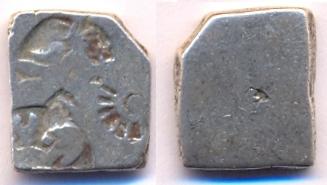
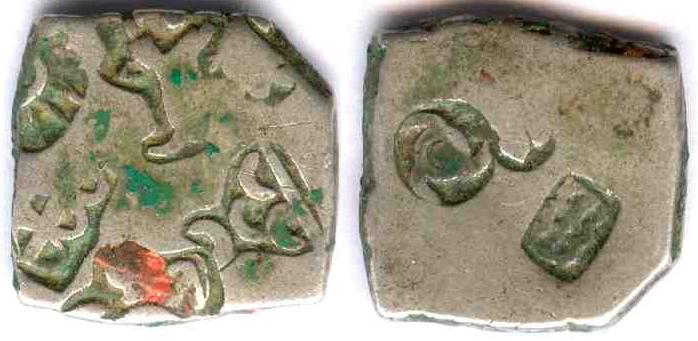
| Between about 1400 BCE and around 800 BCE, the Indian subcontinent saw a succession of invasive waves of Aryan peoples, migrating southeast out of Central Asia. No single, all-encompassing empire took shape immediately, but as the earlier inhabitants of the region (the Dravidians) were pushed ever southward, numerous states emerged from the Indus Valley to the Ganges and Brahmaputra River systems, and extending south into the Deccan Plateau. Among these states were Gandhara, Kurut, Kosala, Magadha, Avanti, Bhoja, and Andhra, among many others. One of the smaller states, located north of the Ganges and approaching the Himalayas (the modern India/Nepal frontier) was Sakya, the homeland of Gautama Buddha. Eventually, large empires did emerge, the first to do so was the Mauryan Empire. | |||||||
|
|||||||
|
|||||||
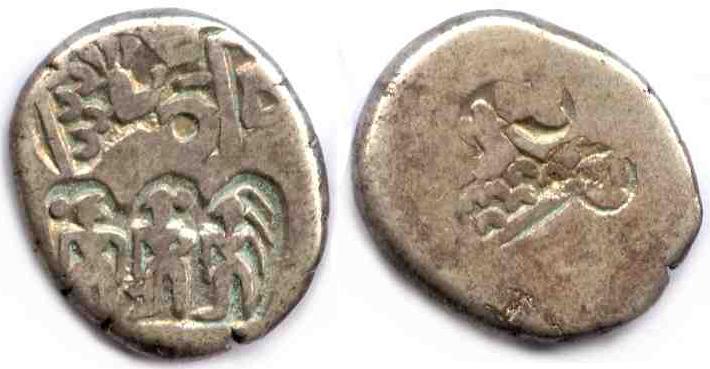
| The Mauryan state swiftly lost cohesion, and was replaced by lesser territories. Two of the largest and most stable were the core of the Mauryan Empire, Magadha, located in the central Ganges plain, and Satavahana, in the central Deccan in the south. But by the 1st century BCE, the Indian subcontinent was a mass of lesser states with no pretensions to Imperial status. Not until the 3rd century CE did another large state emerge - like the Mauryans, from Magadha. At its greatest extent, the Gupta Empire covered all of Northern India, from the Indus to the Bengal Delta, but it could not subdue the Deccan or lands farther south. | |||||||
| c. 187 BC - c. 75 BC Sunga dynasty (in Magadha) 145 BC Chola King Erata conquers Ceylon (now Srilanka) c. 75 BC - c. 30 BC Kanva dynasty 58 BC Epoch of the Krita-Malava-Vikram Era 30 BC Rise of the Satvahana Dynasty in the Deccan 40 CE Sakas in power in Indus Valley and Western India 50 The Kushans and Kanishkas 78 Saka Era begins c. 275 - 550 CE Gupta dynasty 320 Chandragupta I properly establishes the Gupta dynasty 360 Samudragupta conquers the North and most of the Deccan 380 Chandragupta II comes to power. Golden Age of Gupta Literary Renaissance. 405 Fa-hein begins his travels through the Gupta Empire 415 Accession of Kumara Gupta I 455 Skanda Gupta assumes power 476 Birth of astronomer Aryabhatta 606 Accession of Harshavardhana 622 Era of Hejira begins 711 Invasion of Sind by Muhammad Bin Qasim 892 Rise of the Eastern Chalukyas 622 Era of Hejira begins 848 - 1279 Chola Empire (in the south) 985 The Chola Dynasty: Accession of Rajaraja I Dev the Great 1001 Defeat of Rajyapala of Pratihara by Sultan Mahumd Ghazni 1022 - 1346 Hoysala Empire (in the south) 1026 Mahmud Ghazni sacks Somnath Temple |
|||||||
|
|||||||
| Once more, the Empire crumbled, and was replaced by lesser states. The era between about 500 CE and about 1200 CE is dominated by three contending powers, the Pratiharas (west), the Rastrakutas (east), and the Palas (south). Around these, a host of minor states arose, endured for a time and faded. | |||||||
|
|||||||
| Important events in Indian history: | |||||||
| 1191 Prithviraj Chauhan routs Muhammad Ghori: The first battle of Tarain 1192 Ghori defeats Prithviraj Chauhan: The second battle of Tarain 1206 Qutb Al-Din establishes the Slave Dynasty in North India 1221 Mongol invasion under Genghis Khan 1232 Foundation of the Qutub Minar 1288 Marco Polo visits India 1290 Jalal ud-Din Firuz Shah Khalji established the Khalji dynasty 1320 Ghayas Al-Din Tughluq founds the Tughluq dynasty 1325 Accession of Muhammad bin Tughluq 1336 Foundation of Vijayanagar (Deccan) in south till 23 Jan 1565 1347 - 1518 Bahmani Sultanate (in the south) 1398 Timur invades India 1424 Rise of the Bahmani Dynasty (Deccan) 19 Apr 1451 The Lodi dynasty established in Delhi 1469 Guru Nanak born in Taiwandi (Nankana Shib, Distt. Sheikhupura) 1485 Chetnia born in Bengal, who later started Bhagti movement for Sikhs 1489 Adil Shah dynasty at Bijapur 1490 Nizam Shahi dynasty at Ahmednagar 1498 Portuguese first voyage lead by Vasco da Gama 1510 Portuguese Capture Goa 1518 Kutub Shahi dynasty establishes at Golconda 21 Apr 1526 Establishment of the Mughal Dynasty: First Battle of Panipat. Babur defeats Lodis. |
|||||||
| 27 May 1526 Babur founds Empire of Hind, usually known by Historian
as Mughal Empire 1526 - 1530 Reign of Babur. 17 Mar 1527 The Battle of Khanwa. Babar defeats Rajput Confederation and Lodis loyalists. Raja Shiladitya (Silhadi) betrayed Rajput Confederate in the Battle. Expansion of the Mughal Empire into north-east and central India. 06 May 1529 Battle of Ghaghra. Babur defeats Eastern Afghan Confederates and Sultanate of Bengal. Bihar annexed by Mughal Empire and surrounding territories. Peace settlement with Sultanate of Bengal ruler Nasiruddin Nasrat Shah. 28 Dec 1530 Humayun succeeds Babur. Bahur dies at the age of 47 on 26 Dec 1530. 26 Jun 1539 Battle of Chausa in Bihar: Sher Shah Suri defeated Humayun 22 Sep 1539 Death of Guru Nanak 17 May 1540 The Mughal rulers are expelled and superseded by the Afghan Suri dynasty Feb 1555 Humayun captures Rohtas Fort and Lahore 22 Jun 1555 Battle of Sirhind: Humayun defeated Sikandar Shah Suri 23 Jul 1555 Empire of Hind under the Mughal rulers restored 27 Jan 1556 Death of Humayun, Accession of Akbar 14 Feb 1556 Akbar was enthroned at Kalanaur, in Punjab at the age of 13 06 Oct 1556 Hemu defeated the Mughal army in the Battle of Delhi, near Tughlaqabad 07 Oct 1556 Hemu was crowned at Purana Qila fortress, re-establishing Hindu rule in north India 05 Nov 1556 Hindu ruler from Rawari, Samrat Hem Chandra Vikramaditya (Hemu) ruling northern India and planning to capture rest of India was finally defeated after 22 successful battles by Akbar in the Second battle of Panipat. 1562 Akbar abolishes poll tax on Hindus. Tax imposed again 1575-1580 26 Jan 1565 Battle of Talikota, Muslim rulers in Deccan destroys Vijaynagar Empire 23 Feb 1568 Akbar captures Chittor (Chittorgarh) Fort in Rajasthan from Rajputs 21 Mar 1569 Akbar captures Ranthambore Fort in Rajasthan from Rajputs 1571 Foundation of Fatehpur Sikri as capital by Akbar 1572 Akbar annexes Gujarat 07 Aug 1574 Akbar captures Patna 02 Sep 1573 Surat surrenders to Akbar 03 Mar 1575 Battle of Tukaroi. Akbar's victory over Sultanate of Bangala and Bihar 21 Jun 1576 Battle of Haldighati, Akbar defeats Maharana Pratap Singh of Mewar Jul 1576 Battle of Rajmahal. Subjugation of Bengal 1577 Akbar troops invade Khandesh ruled by the Faruqi dynasty 1580 Accession of Ibrahim Adil Shah II in Bengal, Rebellion in Bihar and Bengal 10 Aug 1581 Akbar's march against Muhammad Hakim of Kabul and reconciliation with him 1582 Divine Faith (Din-i-Ilahi) promulgated 16 Feb 1583 Akbar's court wit Raja Birbal dies during expedition to Swat and Bajaur 11 Mar 1584 Nauruz festival introduced the Divine Era after Akbar's accession 22 Feb 1586 Akbar's annexation of Kashmir due to Bhagwan Das submission 1585 Akbar moved his capital from Fatehpur Sikri to Lahore 1591 Mughal conquest of Sind 1592 Annexation of Orissa Nov 1595 Akbar invaded Ahmednagar, Annexation of Baluchistan 1597 Akbar's son Murad dies in Ahmednagar 1599 Finally Akbar captures Ahmednagar 31 Dec 1600 Charter to the English East India Company by Elizabeth I 17 Jan 1601 Akbar’s army occupied Burhanpur and Khandesh become part of Mughal Empire 20 Mar 1602 Formation of the United East India Company of Netherlands 27 Oct 1605 Death of Akbar and Accession of Jahangir [Salim] 06 Apr 1606 Rebellion of Khusrau Mirza S/o Jahangir 30 May 1606 Execution of the Fifth Sikh Guru Arjan by Jahangir for supporting Khusrau 30 May 1607 Ali Quli Khan Istaju Sher Afghan, first husband of Nur Jahan killed 1608 Malik Ambar takes Ahmednagar 1609 The Dutch open a factory at Pulicat 1611 The English establish a factory at Masulipatnam 1612 The Mughal Governor of Bengal defeats the rebellious Afghans 1612 Mughuls annex Koch Hajo from Parikshit Narayan 1615 Submission of Mewar to the Mughuls. Arrival of Sir Thomas Roe in India 1616 The Dutch establish a factory at Surat 1622 Capture of Kangra Fort after a siege of fourteen months by Jahangir's troop 1622 Malik Ambar revolts in the Deccan 1622 Shah Abbas I of Persia beseiges and takes Qandahar from Jahangir 1623 Shah Jahan revolts against Jahangir 1624 Suppression of Shah Jahan's rebellion 1626 100 days rebellion of Mughal general Mahabat Khan against Jahangir 08 Nov 1627 Death of Jahangir. Accession of Shah Jahan 25 Jan 1628 Shah Jahan proclaimed Emperor 17 Jun 1631 Death of Shah Jahan's wife Mumtaz Mahal. The construction of Taj Mahal 1632 Mughal invasion of Bijapur. Grant of the "Golden Firman" of the English Company by the Sultan of Golkunda 1633 End of Ahmednagar Dynasty. After the death of Malik Ambar in May 1626, his son Fath Khan surrendered Ahmadnagar to the Mughals 14 Jul 1636 Aurangzeb appointed Viceroy of Deccan and re-appointed in 1652 1639 Foundation of Fort St. George at Madras by the English 1645 16 year old Shivaji Bhosle captures Torna Fort of the Bijapur kingdom 1656 The Mughal attacks Hyderabad and Golkunda. Annexation of Javli by Shivaji 1657 Invasion of Bijapur by Aurangzeb. Aurangzeb captures Bidar and Kalyani 31 Jul 1658 Aurangzeb deposed Shah Jehan in coup d'etat. Coronation of Aurangzeb 1659 Battles of Khajwah and Deorai 1661 Mughul capture of Cooch Bihar 1664 Shivaji sacks and looted Surat and assumes royal title 18 Feb 1665 Bombay (Mumbai) ceded to England by Portugal 22 Jan 1666 Death of Shah Jahan after 8 years imprisoned in Octagonal Tower of Agra Fort 1666 Shivaji's visit to Agra and escape 06 Jun 1674 Shivaji assumes the title of Chhatrapati 1678 Marwar occupies by the Mughuls 03 Apr 1680 Death of Shivaji 1680 Rebellion of Prince Akbar 1686 English war with the Mughuls. Fall of Bijapur and Adil Shahi dynasty ends 11 Mar 1689 Execution of Sambhaji, elder son of Shivaji at Tulapur, near Pune. c. 1690 Calcutta founded by England 1690 Peace between the Mughuls and the English 1691 Aurangzeb at the zenith of his power 1698 The new English company trading to the East Indies 1699 First Maratha raid on Malwa 30 Mar 1699 Khalsa: a military order of "saint-soldiers" established by 10th Sikh Guru, Gobind Singh 02 Mar 1700 Death of Rajaram at Sinhagad and regency of his widow Tara Bai 1702 Amalgamation of English and the London East India Companies 03 Mar 1707 Death of Aurangzeb. Battle of Jajau and rise of Churaman Jat of Bharatpur 1714 Husain Ali appointed Viceroy of the Deccan 1714 The treaty of the Marathas with Husain Ali 1720 Accession of Baji Rao Peshwa at Poona (Pune) under Emperor Shahu 17 Feb 1739 Battle of Karnal - Nadir Shah defeats Mughals and conquers Delhi 1739 The Marathas capture Salsette and Bassein 28 Apr 1740 Death of Balaji Rao Peshwa. The Marathas invade Arcot 1742 Marathas invade Bengal 11 Mar 1748 Battle of Manupur near Sirhind: Muhammad Shah of Mughal defeats Afghan ruler Ahmad Shah Abdali 18 Oct 1748 First Anglo-French war (Austrian Succession) ends 1750 War of the Deccan and Carnatic Succession 16 Dec 1750 Death of Nasir Jang, ruler of Hyderabad (02 Jun 1748 - 16 Dec 1750) 1751 Treaty of Alivadi with the Marathas Jun 1756 Siraj-ud-daulah captures Calcutta (renamed as Alinagar) 23 Jun 1757 Battle of Plassey: The British defeat Siraj ud-Daulah and French Army 22 Jan 1760 Battle of Wandiwash (Third Carnatic War): The British defeat the French 14 Jan 1761 Third battle of Panipat: Ahmad Shah Abdali defeats the Marathas 16 Jan 1761 French restricted to Pondicherry and they surrendered to British 1761 Surrender of Khande Rao and rise of Hyder Ali at Mysore 23 Jun 1761 Accession of Madhava Rao as fourth Peshwa of the Maratha Empire 1762 Hyder Ali's first war with the Marathas and captures Sira 1762 Hyder Ali captures Ikkeri and ends Keladi Nayaka Kingdom (Bednore) 1764 Battle of Sirhind: Sikhs captured Sirhind from Afghan ruler Taimur Shah 22 Oct 1764 Battle of Buxar: The British defeat Mir Kasim (Nawab of Bengal), Shuja-ud-Daula (Nawab of Oudh) and Shah Alam II (Mughal Emperor) 12 Aug 1765 British take over administration of Bengal as East India Company rule. 16 Aug 1765 Lord Clive for the British get Diwani Rights in Bengal, Bihar and Orissa from Mughal Emperor Shah Alam II as Treaty of Allahabad 03 Sep 1767 First Mysore War starts: The British had to conclude a humiliating peace pact with with Hyder Ali at Madras on 29 March 1769 1770 Bengal famine of 1770 (1769-1773) decreased 1/3 population in Bengal (10 million deaths). 1773 Warren Hastings appointed as Governor of Bengal 1773 The Regulating Act passed by the British Parliament to have some administrative control over East India Company 1773 - 1774 First Rohilla War; Shuja-ud-Daula, Nawab of Awadh was supported by British East India Company against the Rohillas 07 Oct 1774 A Rohilla state under British protection was set up in Rampur 1774 Warren Hastings appointed as Governor-General 20 Oct 1774 Union of all East India Company Settlements 1775 - 1782 The First Anglo-Maratha war at Pune 1780 - 1784 Second Mysore War between British and Hyder Ali 17 May 1782 Treaty of Salbai between British East India Company and Marathas 1782 - 1783 Famine in Madras and surrounding areas including Kingdom of Mysore. 1783 - 1784 Chalisa famine in Delhi, Western Oudh, Eastern Punjab region, Rajputana and Kashmir. 11 million people died during 1782–1784. 15 Jan 1784 The Indian Asiatic Society created by Sir William Jones. 11 Mar 1784 Treaty of Mangalore was signed between Tipu Sultan and British East India Company to end Second Mysore War 1784 Pitt's India Act - British East India Company under the control of the British Government 1789 - 1792 Doji bara famine (Skull famine) killed 11 million people in Hyderabad, Southern Maratha country, Deccan, Gujarat and Marwar. 1790 - 1792 Third Mysore War between the British and Tipu Sultan 19 Mar 1792 Treaty of Seringapatam - Tipu Sultan lost half of its territories to Travancore , Nizam of Hyderabad and Marathas. 1793 Permanent Settlement of Bengal (Cornwallis Code) 12 Feb 1794 Death of Mahadaji Sindhia; Maratha ruler of the state of Gwalior 1794 Jaipur came under British protection 1795 Travancore came under British protection 1795 Cochin become semi-protected States under British 1796 British occupies Andaman Islands and coastal area of Ceylon from Dutch 1798 Nizam of Hyderabad becomes first State to sign Subsidiary alliance 1799 Fourth Mysore War: The British defeat Tipu. Partition of Mysore. 04 May 1799 Tipu Sultan dies in the Battle of Seringapatam (05 April – 04 May 1799) 31 Dec 1802 Treaty of Bassein between British and Baji Rao II, Maratha peshwa of Pune 13 May 1803 Baji Rao II was restored to Peshwarship under the protection of the East India Company. This was not acceptable to all Marathas chieftains 1803 - 1805 The Second Anglo-Maratha war: The British defeat the Marathas 1805 - 1834 Ceded and Conquered Provinces established by British 10 Jul 1806 Vellore Mutiny (Indian sepoys against the British East India Company) 1815 Annexation of Kumaon, Garhwal and east Sikkim. Cis-Sutlej states established. 1814 - 1816 The Anglo-Gurkha war (Anglo–Nepalese War). Nepal lost 1/3 territory. 1817 States of Rajputana accept British suzerainty 1817 - 1818 Third Anglo–Maratha War (Pindari war). End of the Maratha empire. 1818 Kutch accepts British suzerainty 1819 Gaikwads of Baroda accept British suzerainty 1824 - 1826 The First Burmese war (05 Mar 1824 – 24 Feb 1826). Treaty of Yandabo. Annexation of Assam, Manipur, Arakan, and Tenasserim from Burma 04 Dec 1829 Prohibition of Sati 1831 Mysore State goes under British administration till 1881 1833 Renewal of Company's Charter; Abolition of Company's trading rights. Bahawalpur accepts British Suzerainty. 1834 Coorg annexed by British 1835 Education Resolution 1836 North-Western Provinces established 1836 – 1848 Thuggee and Dacoity Suppression Acts (14 Nov 1836 - 20 May 1848) 1837 Post Offices were established 1837 - 1838 Agra famine - approximately 800,000 people had died of starvation Jun 1838 Tripartite treaty between Shah Shuja, Ranjit Singh and the British 19 Jan 1839 port of Aden in Yemen is captured by the British East India Company 1839 - 1842 First Anglo-Afghan War. Decisive Afghan victory and British withdrawal. Jan 1842 Massacre of Elphinstone's army led by Akbar Khan of Afghanistan 12 Feb 1843 British annexation of Sindh. 07 Apr 1843 Abolition of slavery in British India Dec 1843 Gwalior war between British and Marathan forces 11 Dec 1845 First Anglo-Sikh war; ended 10 Feb 1846. 09 Mar 1846 Treaty of Lahore - Sikhs cede Jullundur Doab, Hazara, and Kashmir to British 16 Mar 1846 Treaty of Amritsar - settle Kashmir dispute after the First Sikh War British sold Kashmir to Raja of Jammu, Gulab Singh for 7.5 million rupees 12 Jan 1848 Lord Dalhousie becomes the Governor-General 1848 - 1849 Second Anglo-Sikh war: (Rise of Sikh Power) British annex Punjab as Sikhs are defeated. 1848 British took over Satara using Doctrine of Lapse 1849 British annexation of Punjab and North-West Frontier Province. British took over Jaipur and Sambalpur using Doctrine of Lapse 1850 Construction begins on Indian Railways 11 Apr 1850 The Caste Disabilities Removal Act 1850 1851 First telegraph line laid in India 1852 - 1853 Second Anglo-Burmese war (05 Apr 1852 – 20 Jan 1853). Company's victory. Annexation of Lower Burma 16 Apr 1853 Railway opened from Bombay to Thane 1853 Telegraph line from Calcutta to Agra. British annexation of Berar 1854 Postage Stamps for India were introduced. Great Ganges Canal opened. British took over Nagpur and Jhansi using Doctrine of Lapse. British creates Central India Agency - adding 148 princely states in one area with headquarter at Indore. 1855 Public Telegram services starts operation 25 Jul 1856 Hindu Widows Remarriage Act 1856 British took over Awadh with the reason: ruler was not ruling properly Jan-Sep 1857 First Indian universities founded 10 May 1857 First War of Indian Independence and the Sepoy Mutiny till 20 Jun 1858 29 Mar 1858 The last Mughal ruler Bahadur Shah Zafar is deposed 04 Jun 1858 John Bright in British parliament suggested "India should be divided into five presidencies" 1858 Liquidation of the English East India Company under Government of India Act |
|||||||
| 1858 British Crown takes over
the Indian Government. Reorganization of British Indian Army. 02 Aug 1858 British Act of Parliament annexes the Empire, creating British India 01 Nov 1858 British India starts effectively. 1860 Construction begins: University of Bombay, University of Madras, and University of Calcutta. Indian Penal Code passed into law. 1860-1861 Upper Doab famine. Upper Doab of Agra; Delhi and Hissar divisions of the Punjab. 2 million people died. 1861 Indian Councils Act. Indian High Courts Acts. Indian Police Act. Establishment of Archaeological Survey of India. James Wilson, financial member of Council of India reorganizes customs, imposes income tax, creates paper currency. 1862 Indian Penal Code came into force, drafted in 1860. 20 Nov 1863 James Bruce, 8th Earl of Elgin and 12th Earl of Kincardine died in Dharamsala, Punjab due to heart attack. 1864 - 1865 British won the Bhutan War (Duar War) from Bhutan. Treaty of Sinchula signed on 11 Nov 1865. British suzerainty over Cooch Behar and the Duars. 1865 - 1867 Orissa famine 0f 1866. In Orissa and Bihar; Bellary and Ganjam districts of Madras. 1 million died (814,469 in Orissa, 135,676 in Bihar and 10,898 in Ganjam). 1867 Creation of Imperial Forestry Service. Creation of Department of Irrigation. 1868 Punjab Tenancy Act. Railway opened from Ambala to Delhi 16 Oct 1868 Denmark sold the rights of Nicobar Islands to Britain. Nicobar Islands incorporated into India in 1869. 1869 Rajputana famine. 1.5 million died. Creation of Department of Agriculture. Major extension of railways, roads, and canals. 1870 Indian Councils Act 1871 - 1872 India Census was carried out in some provinces and areas 1872 Chief Commissionership established in Andaman and Nicobar Islands. 08 Feb 1872 Richard Southwell Bourke, 6th Earl of Mayo was assassinated at Port Blair, Andaman Islands by Sher Ali Afridi. 1873 - 1874 The Bihar Famine in Bihar, Bengal and United Provinces. Mortalities was prevented by importation of rice from Burma. 10 Apr 1875 Gaikwad of Baroda, Malhar Rao Gaekwar dethroned for misgovernment by the orders of the Secretary of State for India, Lord Salisbury. Anyhow dynasty continued to a child ruler: Sayaji Rao III Gaekwar [Gopalrao]. 1875 – 1876 Eight-month tour of the sub-continent by the Prince of Wales, future King Edward VII. 1876 – 1878 Great Famine (Southern India famine of 1876–78). Madras, Bombay, Mysore and Hyderabad. 5.5 million died in British territory. Mortality unknown for princely states. Total famine mortality estimated 6.1 to 10.3 million. 01 Jan 1877 Delhi Durbar: The Queen of England proclaimed Empress of India, proclamation on 28 Apr 1876. 19 Jun 1877 Baluchistan established as a Chief Commissionership. 1878 Vernacular Press Act, repealed on 07 Dec 1881. Creation of Famine Commission of 1878–80 under Sir Richard Strachey. Indian Forest Act of 1878. University of Calcutta became one of the first universities to admit female graduates to its degree programmes. 1878 - 1880 The Second Anglo-Afghan War. Treaty of Gandamak in May 1879. British withdraw from Afghanistan but will maintain foreign relations of Afghanistan. 1881 Factory Act. Rendition of Mysore 1882 University of Punjab established at Lahore became the fourth University. 1883 The Ilbert Bill - Introduced by Viceroy Ripon to allow Indian judges and magistrates the jurisdiction to try British offenders in criminal cases at the District level. Famine Code promulgated by the Government of India. 25 Jan 1884 Criminal Procedure Code Amendment Act 1884, effective on 01 May. 1884 Creation of the Education Commission. Creation of indigenous schools, especially for Muslims. Repeal of import duties on cotton and of most tariffs. Railway extension. 1885 Passage of Bengal Tenancy Act. 30 Mar 1885 Panjdeh Incident - Russian forces seized Afghan territory south of the Oxus River (modern name Amu Darya). Diplomatic crisis between Russia and Great Britain as part of The Great Game. Anglo-Russian Boundary Commission was established without Afghanistan's concern. 07 Nov 1885 Third Anglo-Burmese War; ended 29 Nov. British victory. End of the Konbaung dynasty in Upper Burma. The province of Burma becomes part of the British India (separated in 1937). 28 Dec 1885 Indian National Congress was founded by suggestion of British civil servant Allan Octavian Hume at Gokuldas Tejpal Sanskrit College in Bombay, with 72 delegates. First meeting of the Indian National Congress ended 31 Dec. 1886 – 1887 Report of Public Services Commission. Creation of Imperial Civil Service. 23 Sep 1887 University of Allahabad established. The foundation stone as the Muir Central College was laid by Governor-General of India, Lord Northbrook on December 09, 1873. 1888 – 1889 Ganjam, Orissa and North Bihar Famine. 150,000 deaths in Ganjam. Deaths were due to starvation as famine relief was not provided in time. 1891 Indian Factory Act. Census covering India, Pakistan, Bangladesh and Burma 1892 Indian Councils Act to regulate Indian administration 1893 The Durand Line - agreement between Mortimer Durand of British India and Afghan Amir Abdur Rahman Khan for fixing the limit of their respective spheres of influence. Railways, roads, and irrigation works begun in Burma. Border between Burma and Siam finalized. 1873 – 1893 Fall of the Rupee, resulting from the steady depreciation of silver. 1894 Indian Prisons Act of 1894 1895 Pamir agreement Russia. The Chitral Campaign. 1896 – 1897 Tirah Campaign. Ended 04 April 1898. Indian famine of 1896–97 beginning in Bundelkhand. 5 million deaths. Bubonic plague in Bombay (1896), Poona (1897) and Calcutta (1898). Riots in wake of plague prevention measures. 1897 Famine Commission. 12 Jun 1897 The Assam earthquake of 1897 with estimated magnitude of 8.1Mw. 1897 - 1898 British military campaign against the Mohmands. 09 Dec 1898 The Bombay City Improvement Trust 06 Jan 1899 Lord George Curzon becomes Governor-General and Viceroy 1899 – 1900 Indian famine of 1899–1900 in Bombay, Central Provinces, Berar, Ajmer Hyderabad, Rajputana, Central India, Baroda, Kathiawar and Cutch. 1 million deaths in British territories. 1899 Financial Reform Act of 1899; Gold Reserve Fund created for India. Punjab Land Alienation Act. Inauguration of Department (now Ministry) of Commerce and Industry. 22 Jan 1901 Queen Victoria dies. 1901 Census of 1901 gives the total population at 294 million, including 62 million in the princely states and 232 million in British India. 09 Nov 1901 Creation of the North West Frontier Province under a Chief Commissioner. 1903 The Durbar of Delhi was held to celebrate the coronation of King Edward VII and Queen Alexandra as Emperor and Empress of India. 1903 – 1904 Francis Younghusband's British expedition to Tibet. 1904 Ceded and Conquered Provinces and Oudh renamed United Provinces. Reorganization of Indian Universities Act. Systemization of preservation and restoration of ancient monuments by Archaeological Survey with Indian Ancient Monument Preservation Act. Inauguration of agricultural banking with Cooperative Credit Societies Act. 16 Oct 1905 The First Partition of Bengal, announced on 07 July 1905 by Lord Curzon. Due to political protests, Bengal was reunited on 12 December 1911. The administrative capital in 1911 of British India was moved from Calcutta to New Delhi as well. 1905 – 1906 Bombay Bundelkhand Famine. 235,062 deaths in Bombay (of which 28,369 attributed to Cholera). 1906 Congress declaration regarding Swaraj 1906 Jugantar Patrika was a Bengali revolutionary newspaper founded in Calcutta 30 Dec 1906 Formation of All-India Muslim League 31 Aug 1907 Anglo-Russian Convention at St. Petersburg, Russia to discuss boundary control in Persia, Afghanistan and Tibet. Jun 1908 Newspaper Act 25 May 1909 Indian Councils Act 1909 (also Minto-Morley Reforms) Appointment of Indian Factories Commission. 1910 Establishment of Department of Education 1911 Visit of King George V and Queen Mary: commemoration as Emperor and Empress of India at last Delhi Durbar. King George V announces creation of new city of New Delhi to replace Calcutta as capital of India. Indian High Courts Act of 1911. Indian Factories Act of 1911. Partition of Bengal modified to create Presidency of Bengal. 1912 The Imperial capital shifted from Calcutta to Delhi. Construction of New Delhi 1912–1929. 1913 Education Resolution of the Government of India 1914 - 1918 World War I - Indian Army in: Western Front, Belgium 1914; German East Africa (Battle of Tanga, 1914); Mesopotamian Campaign (Battle of Ctesiphon 1915, Siege of Kut 1915–1916 and Fall of Baghdad 1917); Battle of Galliopoli 1915–1916; Sinai and Palestine Campaign (Battle of Megiddo 1918). 1915 Passage Defense of Indian Act - gave the police a free hand. 1916 Home Rule League founded. Foundation of Woman's University at Poona 29&31 Dec 1916 Lucknow Pact - Sarojini Naidu gave Jinnah, the chief architect of the Lucknow Pact, the title of "the Ambassador of Hindu-Muslim Unity". 10 Mar 1919 Roelatt Act. Later Rowlatt Act evokes protests. A "hartal" on 06th April. The Montague Chelmsford Reforms offer limited autonomy. 10 Apr 1919 Protest in Amritsar for releasing Satya Pal and Saifuddin Kitchlew 13 Apr 1919 Martial law in Punjab. Amritsar massacre (Jallianwala Bagh massacre) 06 May 1919 Third Anglo-Afghan War; ended 08 Aug 1919. Treaty of Rawalpindi and Reaffirmation of the Durand Line. 23 Dec 1919 Government of India Act (Montagu-Chelmsford Reforms) - expand participation of Indians in the government. 1920 The Khilafat Movement started. Mahatma Gandhi leads the Congress. Non-co-operational Movement lasted till 10 Mar 1922 Aug 1921 Moplah (Muslim) rebellion in Malabar. Census of India. 1922 Civil Disobedience Movement. Chauri-Chaura violence leads to Gandhi suspending movement in Feb 1922. University of Delhi established. 10 Mar 1922 Gandhi was arrested. Released in Feb 1924 for appendicitis operation. 1923 Swarajists in Indian Councils. Certification of Salt Tax. Hindu-Muslim riots. Indian Workers Compensation Act of 1923. 1925 Reforms Enquiry committee Report 1926 Royal Commission on Agriculture. Factories Act. Indian Trade Unions Act of 1926. Royal (Hilton Young) Commission on Indian Currency & Finance, guidelines by Dr. Ambedkar. 1927 Indian Navy Act. Simon Commission Appointed. 1928 Simon Commission comes to India; Bombay on 03 Feb and Lahore on 30 Oct. Boycott by all parties. All Parties Conference. Aug 1928 Nehru Report - memorandum outlining a proposed new Dominion constitution for India chaired by Motilal Nehru with his son Jawaharlal acting as secretary. 30 Oct 1928 Lala Lajpat Rai protest against the Simon Commission at Lahore. The police responded with a violent lathi charge which caused his death on 17th Nov. Dec 1928 Resolution at the Calcutta by Ghandi demanding British government to grant India dominion status within one year or face a new campaign of non-cooperation with complete independence. 28 Mar 1929 "The Fourteen Points of Jinnah" against "Nehru Report" 1929 Lord Irwin promises Dominion Status for India. Trade Union split. Appointment of Royal Commission of Indian Labour. 31 Dec 1929 The flag of India was unfurled in Lahore. 26 Jan 1930 India's Independence Day by the Indian National Congress meeting in Lahore. 12 Mar 1930 Civil Disobedience movement continues. Ghandi's Satyagraha against the tax on salt. Salt March from Ahmedabad to Dandi of 388 Kilometers. Ended on 06 April. 23 Apr 1930 Massacre at the "Qissa Khawani Bazaar" in Peshawar. 12 Nov 1930 First Round Table Conference; ends on 19 Jan 1931 1931 Census of India. New Delhi inaugurated as capital of India. 05 Mar 1931 Irwin-Gandhi Pact 23 Mar 1931 Bhagat Singh was hanged at 19:30 in Lahore jail with Rajguru and Sukhdev 07 Sep 1931 Second Round Table Conference; ends in Dec 1931 1932 Suppression of the Congress movement 04 Aug 1932 The Communal Award - Granted separate electorates to minority communities. Dalit leader B. R. Ambedkar successfully granted untouchables separate electorates under this new constitution. Similar provisions were already available for other minorities, including Muslims, Christians, Anglo-Indians and Sikhs. 20 Sep 1932 Gandhi embarked indefinite fast while imprisoned at the Yerwada Jail, Pune against Communal Award. 24 Sep 1932 Poona Pact - agreement between Dr. B. R. Ambedkar and Mahatma Gandhi at the Yerwada Jail, Pune through negotiations mediated by Palwankar Baloo. It was a pact between lower (Dalits) and upper caste Hindus. 01 Oct 1932 Indian Military Academy at Dehradun established. 08 Oct 1932 Royal Indian Air Force created. 17 Nov 1932 Third Round Table Conference starts; ends on 25 Dec 1932 1933 Publication of White Paper on Indian reforms. Indian Workmen's Compensation Act of 1933. 08 May 1933 Gandhi began a 21-day fast of self-purification and launched a one-year campaign to help the Harijan movement. 15 Jan 1934 Bihar Earthquake of 8.1 magnitude. 30,000 people died. Munger and Muzaffarpur were completely destroyed. 1934 Civil Disobedience Movement called off. Indian Factories Act of 1934. 01 Apr 1935 Creation of Reserve Bank of India at Calcutta. 31 May 1935 Earthquake of magnitude of 7.7 Mw at 3:02 am at Quetta, 60,000 people died. Aug 1935 The Government of India Act 1935. 1936 Indian Payment of Wages Act of 1936. Feb 1937 Final results of the Provincial elections were declared. Elections were held in eleven provinces - Madras, Central Provinces, Bihar, Orissa, United Provinces, Bombay Presidency, Assam, NWFP, Bengal, Punjab and Sindh. The Indian National Congress emerged in power in all the provinces except for three - Bengal, Punjab and Sindh. The All-India Muslim League failed to form the government in any province. 1937 Inauguration of Provincial Autonomy. Congress ministries formed in a majority of Indian provinces. Burma administration separated. 03 Sep 1939 Viceroy Linlithgow declared India at war with Germany without prior consultation with Indians. Jinnah agree to support the War. 22 Oct 1939 Political deadlock in India as Congress ministries resign on Viceroy Linlithgow decision of War. Linlithgow and Jinnah pleased with the resignations. 1939 - 1945 Indian Army in Mediterranean, Middle East and African theatres of World War II [North African campaign: Operation Compass 1940-1941, Operation Crusader 1941, First Battle of El Alamein 1942, Second Battle of El Alamein 1942. East African campaign 1940-1941, Anglo-Iraqi War 1941, Syria-Lebanon campaign 1941, Anglo-Soviet invasion of Iran 1941, Battle of Hong Kong 1941, Battle of Malaya 1941-1942, Battle of Singapore 1942, and Burma Campaign 1942-1945. 23 Mar 1940 All-India Muslim League demanded a separate sovereign state for Muslims in Lahore Resolution. 1942 Japanese occupy Andaman and Nicobar Islands (Mar 1942 to Aug 1945). Mar 1942 Cripps Mission to India. Apr 1942 Subhash Chandra Bose forms Indian National Army. 14 Jul 1942 Congress adopts Quit India Resolution and later Congress leaders arrested 08 Aug 1942 The Quit India Movement (August Movement) - Ghandi called for a civil disobedience movement "Do or Die" for immediate independence of India at Gowalia Tank Maidan, Bombay. 09 Aug 1942 Gandhi and the entire Congress Working Committee were arrested in Bombay. 21 Oct 1943 Provisional Government of Free India proclaimed (Arzi Hukumate-e-Azad Hind) at Singapore (administering the Andaman and Nicobar Islands Dec 1943 to 18 Aug 1945). 1943 - 1944 Bengal famine of 1943. 1.5 million died from starvation and 3.5 million died from epidemics. 06 May 1944 Gandhi release from jail because of his failing health & necessary surgery. Sep 1944 Gandhi-Jinnah Talks break down on Pakistan issue. 27 Nov 1945 Baluchistan Earthquake at 21:56, with its epicentre in Makran region. 1945 First trial of the Indian Army men opened. 25 Jun 1945 Simla Conference - Wavell Plan for Indian self-government; ended 14 Jul. 18 Feb 1946 Mutiny in Royal Indian Navy. 16 May 1946 Cabinet Mission's plan announced. A united Dominion of India would be given independence. Muslim League decides to participate in the Interim Government. 16 Jun 1946 16 June Plan - India to be divided into Hindu-majority India and a Muslim-majority India that would later be renamed Pakistan. 16 Aug 1946 Jinnah called for Direct Action Day (Great Calcutta Killings). Gandhi was infuriated and personally visited the most riot-prone areas to stop the massacres. 25 Aug 1946 India granted limited self rule. 02 Sep 1946 Interim Government formed. Constitutional Assembly's first meeting. 03 Jun 1947 Announcement of Lord Mountbatten's plan for partition of India. 18 Jul 1947 Indian Independence Act 1947 of the British Parliament enacted. 09 Aug 1947 Sir Cyril Radcliffe's Award on Boundary Commission announced. 15 Aug 1947 Partition of India and Independence completed. 17 Aug 1947 The Radcliffe Line was published. |
|||||||
| Coins of India can be viewed by clicking on the links below, sorted yearly according to respective ruler and state. | |||||||
|
|||||||
BRITISH INDIA
|
|||||||
| For earlier coinage of India, refer to the links below on various princely states, having coins in my collection. | |||||||
|
|||||||
|
15 Aug 1947 British India, together with acceded states, is partitioned into Dominion of India and Dominion of Pakistan; style "Emperor of India" is abandoned (retroactive proclamation that is dated 22 Jun 1948). 21 Oct 1947 India-Pakistan War of 1947-48 starts; ends 31 Dec 1948. 27 Oct 1947 Jammu and Kashmir accede to India. 30 Jan 1948 Nathuram Vinayak Godse assassinated Ghandi by shooting. 17 Sep 1948 Hyderabad annexed by India. 27 Jul 1949 Karachi Agreement with India on Cease-Fire Line in the State of Jammu and Kashmir, monitored by United Nations observers. 26 Nov 1949 Constitution Day (National Law Day / Samvidhan Divas). 26 Jan 1950 Republic of India, styled "India, that is Bharat." 01 Nov 1954 French India incorporated into India. 01 Nov 1956 States Reorganization Act implemented. 26 Jan 1957 The incorporation of Jammu and Kashmir is declared completed. 19 Sep 1960 "Indus Waters Treaty" is signed with Pakistan at Karachi. 19 Dec 1961 Goa, Damão, and Diu under Portugal were occupied by India. 16 Mar 1962 Goa annexed by India. 21 Nov 1962 China occupies Aksai Chin region of Kashmir. Sino-Indian War ends. 20 Mar 1965 India-Pakistan War of 1965 starts; ends 23 Sep 1965. 03 Dec 1971 India-Pakistan War of 1971 starts; ends 16 Dec 1971. 02 Jul 1972 "Line of Control" signed with Pakistan at Simla. 31 Dec 1974 Goa annexation recognized by Portugal. 26 Apr 1975 Annexation of Sikkim. 25 Jun 1975 The Indian Emergency; ends 21 Mar 1977. 13 Apr 1984 Operation Meghdoot: Siachen Conflict with Pakistan. 26 May 1999 Kargil conflict with Pakistan; ends 11 Jul 1999. 01 Oct 2001 A devastating attack on the state assembly in Indian-administered Kashmir kills 38 people. 13 Dec 2001 An attack on the Indian parliament in Delhi leaves 14 dead. 13 Dec 2001 – 10 June 2002 India–Pakistan standoff. 1,874 Indian soldiers killed. 26 Nov 2008 Co-ordinated attacks on Mumbai's main railway station, Taj Hotel and a Jewish cultural centre kill 166 people. India blames Pakistan-based group Lashkar-e-Taiba. 25 Dec 2015 Narendra Modi made a surprise visit to Pakistan while returning from Kabul. 02 Jan 2016 Four-day attack on Indian air base in Pathankot leaves seven Indian soldiers and six militants dead. 18 Sep 2016 Attack on army base in Uri in Indian-administered Kashmir kills 19 soldiers. 30 Sep 2016 India says it carried "surgical strikes" on militants in Pakistani Kashmir. Pakistan denies strikes took place. 19 Jan 2019 Swine flu hits Rajasthan in India; 40 dead. 26 Feb 2019 India did surgical strike by sending 12 Mirage 2000 jets that dropped four bombs over 1000 kilograms near Balakot, Khyber Pakthunkhwa. Resulting in no casualties or damage. 27 Feb 2019 Pakistan Air force shoots down two Indian aircraft inside Pakistani airspace and arrested one Indian pilot. 24 May 2019 BJP wins landslide poll victory in India. 31 Jul 2019 Indian parliament outlaws instant divorce for Muslims. 05 Aug 2019 The India constitutional article 370 providing for the special status of Jammu and Kashmir is revoked and legislation is introduced to split the state into two union territories, Ladakh and a smaller Jammu and Kashmir. 17 Aug 2019 UNSC holds exclusive meeting on Indian-occupied Kashmir after over 50 years. 25 Aug 2019 Indian opposition leaders denied entry into Srinagar on orders from New Delhi. 01 Sep 2019 Amid cries of ‘ethnic cleansing’, India leaves around 2 million people in Assam on the verge of statelessness. 08 Sep 2019 India loses contact with its spacecraft just before it was due to land on the moon. 05 Oct 2019 India admits to having downed its own helicopter and six soldiers during skirmishes with Pakistan. 14 Oct 2019 Indian-American Abhijit Banerjee at the age of 58, his French-American wife Esther Duflo and another economist Michael Kremer from USA jointly won the 2019 Nobel Economics Prize “for their experimental approach to alleviating global poverty”. 10 Nov 2019 Indian Supreme Court allows temple construction on Babri Masjid site. 19 Nov 2019 Home minister Amit Shah, declared in the Rajya Sabha of the Indian parliament that the National Register of Citizens (NRC) will be implemented throughout the country. 04 Dec 2019 The Citizenship Amendment Act protests starts. 12 Dec 2019 Introduction of Citizenship (Amendment) Act 2019 was signed. Narendra Modi given a clean chit in Gujarat massacre. |
|||||||
| Coins of "Republic of India" can be viewed by clicking the below links, sorted yearly according to respective Presidential rule. | |||||||
|
|||||||
|
|||||||
| Others Coins: | |||||||
Indian Coins literature and references:
|
|||||||
| Countries / Territories | |||||||
| Chiefa Coins | |||||||